Industry Report · October 2026 · Inaugural Edition

Defence Industry Exchange 2026

Event Consolidation and Industry Findings Report

On September 29, 2026, the Ontario Defence Association (ODA) hosted its inaugural Defence Industry Exchange at the Royal Canadian Military Institute (RCMI) in Toronto. This report consolidates what industry told us.

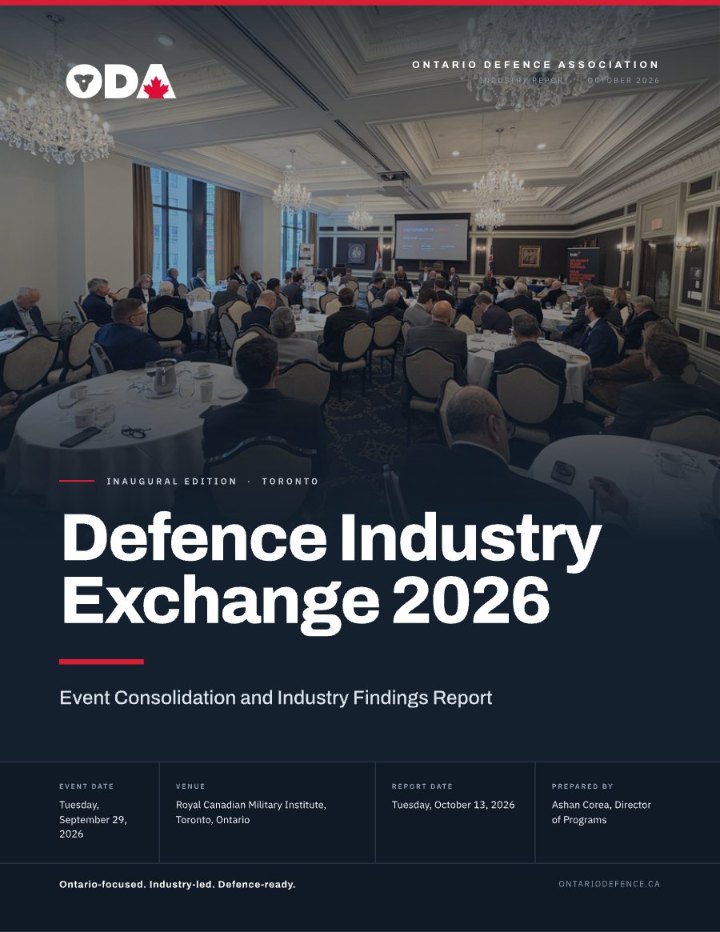
Cover of the Defence Industry Exchange 2026 Event Consolidation and Industry Findings Report PDF · 37 pages10.5 MB
Event Date
Tuesday, September 29, 2026
Venue
Royal Canadian Military InstituteToronto, Ontario
Report Date
Tuesday, October 13, 2026
Prepared By
Ashan CoreaDirector of Programs
Overview

Executive Summary

On September 29, 2026, the Ontario Defence Association (ODA) hosted its inaugural Defence Industry Exchange at the Royal Canadian Military Institute (RCMI) in Toronto.

The event brought together 110 attendees representing a cross-section of Ontario’s defence and dual-use industrial ecosystem, including established defence manufacturers, small and medium-sized enterprises (SMEs), technology developers, industrial suppliers, financial institutions, government organizations, and industry-enabling stakeholders.

110
Attendees
48
Categorized roundtable observations
5
Extensive discussion records
21
Individual survey responses
Participating organizations represented a broad range of sectors, including:
  • Defence manufacturing and military equipment.
  • Aerospace, aviation, and autonomous systems.
  • Advanced manufacturing, precision machining, and industrial materials.
  • Cybersecurity, artificial intelligence, and emerging technologies.
  • Maritime, land systems, and defence supply chains.
  • Engineering, technical services, research, and commercialization.
  • Financial services, investment, and business advisory services.
  • Government, economic development, workforce development, and post-secondary education.

The diversity of organizations reflected both Ontario’s established defence industrial base and the considerable potential for adjacent industries to contribute to Canadian and allied defence requirements.

The Exchange was designed as a focused, recurring engagement forum that complements larger industry conferences by emphasizing direct discussion, practical knowledge-sharing, relationship development, and structured industry feedback.

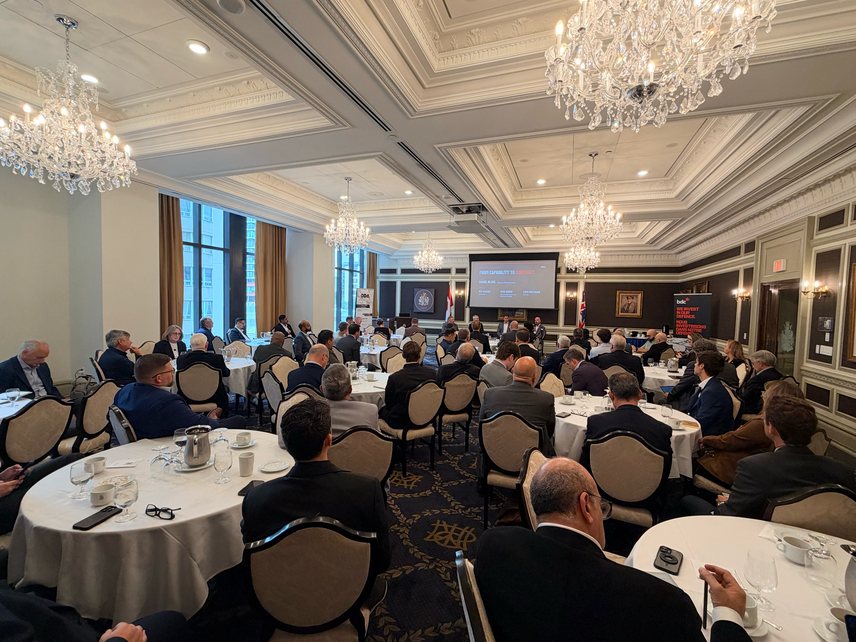
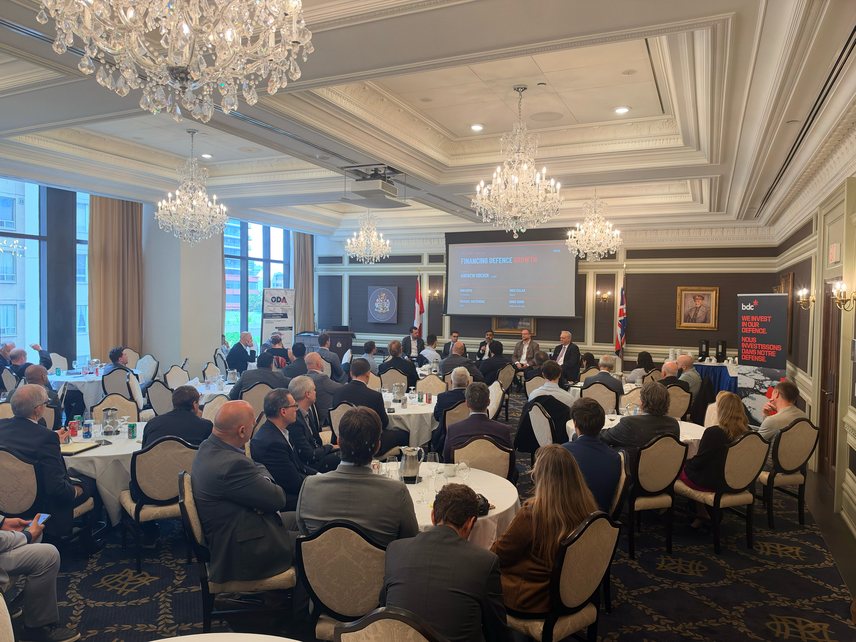
Attendees seated at round tables in the Otter Room at the Royal Canadian Military Institute
Main auditorium · Otter Room, 4th Floor

Event Objectives

The Exchange pursued four primary objectives:

01

Inform

Provide participating organizations with updates on defence industrial strategy, government priorities, ODA programming, and emerging opportunities.

02

Connect

Facilitate meaningful relationships between Ontario companies, prime contractors, financial institutions, government representatives, and ecosystem stakeholders.

03

Understand

Capture industry perspectives on opportunities, constraints, and enabling conditions affecting Ontario’s defence industrial readiness.

04

Enable

Use industry feedback to strengthen coordination among the organizations and stakeholders positioned to address recurring industrial challenges.

Announcements

Major Announcements

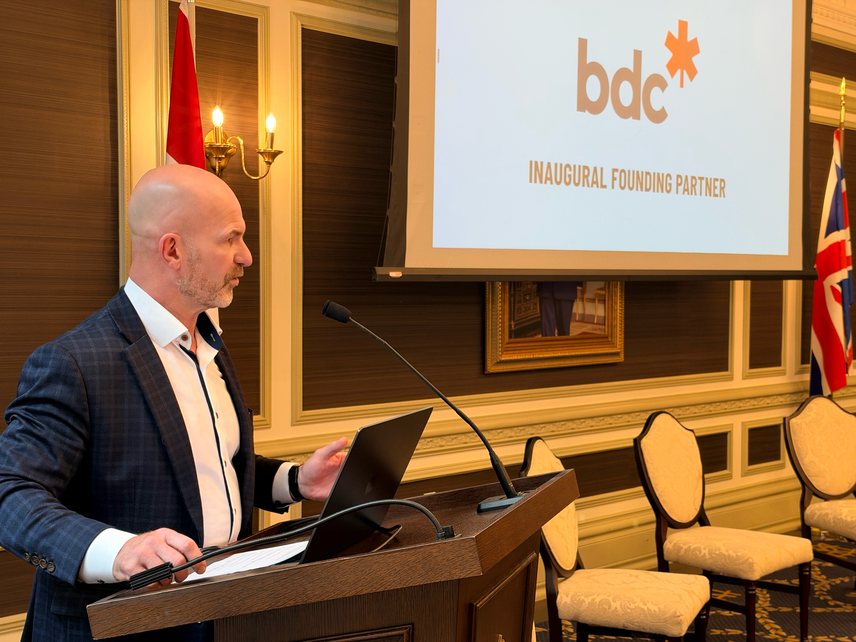
BDC representative speaking at the podium in front of a screen reading BDC Inaugural Founding Partner
Announcement

BDC — Inaugural Founding Member

A significant milestone was the announcement of the Business Development Bank of Canada (BDC) as the Ontario Defence Association’s inaugural Founding Member.

This recognition reflects BDC’s institutional support for the Association and its commitment to strengthening the capacity of Canadian businesses participating in defence and dual-use markets.

BDC representatives also participated in the capital panel and both executive roundtable discussions, providing industry participants with direct access to financial and business development perspectives.

Announcement

Publicus and ENTEX — Strategic Partners

The event also marked the announcement of Publicus and ENTEX as initial Strategic Partners of the Ontario Defence Association.

These partnerships support ODA’s broader objective of connecting industry requirements with practical services, digital infrastructure, and scalable capabilities that strengthen Ontario’s defence industrial ecosystem.

Through its collaboration with ENTEX, ODA is supporting the introduction and accessibility of the Capability Atlas, a platform developed by ENTEX to improve industrial capability mapping and discovery. ENTEX is responsible for developing the platform, while ODA is collaborating to make it available to its members and the broader defence and dual-use industry.

Separately, ODA’s strategic partnership with Publicus supports procurement intelligence capabilities for members, complementing industrial capability discovery with improved visibility into relevant procurement opportunities.

Industry Feedback

Industry Feedback

The event incorporated two concurrent executive roundtables and a digital audience feedback mechanism. The resulting intelligence included:

Feedback Source
Material Captured
Executive Roundtable 1 — Library
48 categorized observations, concerns, resource requests and suggestions
Executive Roundtable 2 — Medals Room
Five extensive discussion records covering multiple industry challenges and recommendations
Digital industry feedback platform
Nine survey submissions containing 21 individual responses

The findings reveal substantial interest in Ontario’s defence industrial opportunities, alongside recurring concerns regarding procurement visibility, engagement with prime contractors, access to capital, certification requirements, workforce availability, and industrial capacity.

A central message emerged

Ontario industry requires more than awareness of defence investment announcements. Companies need practical pathways that connect existing capabilities with identifiable opportunities, qualified partners, financing, and ultimately contracts.

The findings documented in this report provide an evidence base for continued engagement with ODA members, government, industry, strategic partners, founding members, and other organizations positioned to strengthen Ontario’s defence industrial readiness.

At a Glance

Priority Industry Findings

The following findings summarize the most consistent and actionable themes emerging from the discussions.

1

Greater Demand Visibility

Companies need timely, specific information about procurement requirements, future opportunities, and anticipated contract timelines to support investment decisions.

2

Better Industry Matchmaking

SMEs require improved visibility into prime contractors, Tier 1 suppliers, procurement contacts, and practical supply-chain opportunities.

3

More Accessible Financing

Long procurement cycles, certification requirements, equipment investments, and operating costs create barriers to entering and expanding within defence markets.

4

Stronger Supplier Readiness

Cybersecurity, controlled goods, industrial standards, security requirements, and qualification processes represent substantial challenges, particularly for smaller businesses.

5

Workforce and Industrial Capacity

Skilled labour shortages, training requirements, immigration considerations, and delays in industrial demand affect the ability to retain and expand Canadian manufacturing capacity.

6

Better Coordination

Participants expressed a need for clearer engagement among industry, governments, defence customers, financial institutions, and enabling organizations.

These findings should be understood collectively. Industry readiness is not determined by any single factor.

The ability of a company to respond to defence requirements depends on the interaction between market intelligence, qualified industrial capacity, financial resources, workforce availability, technical compliance, and access to appropriate customers.

01Section 01

Event Overview

1.1Venue and Format

The Defence Industry Exchange took place on Tuesday, September 29, 2026, from 9:00 a.m. to 3:30 p.m., at the Royal Canadian Military Institute, 426 University Avenue, Toronto.

The event operated across three primary spaces:

4th Floor

Otter Room

Main auditorium presentations and moderated industry panels.

5th Floor

Library

Executive Industry Roundtable 1.

2nd Floor

Medals Room

Executive Industry Roundtable 2.

The auditorium and two executive roundtables operated concurrently during the structured program, enabling focused discussions tailored to different aspects of the defence industrial environment.

Participants subsequently joined a combined industry and stakeholder networking session.

1.2Main Auditorium Agenda

TimeProgram
9:00–9:30 a.m.Registration, Coffee and Networking
9:30–9:35 a.m.ODA Chair’s Welcome
9:35–9:40 a.m.BDC Inaugural Founding Member Recognition and Remarks
9:40–9:55 a.m.ODA Programs Update
9:55–10:10 a.m.Defence Industrial Strategy Update
10:10–10:30 a.m.Ontario Defence Industrial Strategy Vision Outlook — MEDJCT
10:30–10:40 a.m.Coffee Break
10:40 a.m.–12:00 p.m.Industry Panel — From Capability to Contract
12:00–1:00 p.m.Lunch and Networking
1:00–1:55 p.m.Capital Panel — Financing Defence Growth
1:55–2:00 p.m.Program Transition
2:00–3:30 p.m.Combined Industry and Stakeholder Networking

1.3Presentations and Speakers

Ted Kirkpatrick

ODA Chair’s Welcome

Ted Kirkpatrick, Chair of the Ontario Defence Association, welcomed participants to the inaugural Exchange.

The opening established the significance of the event as part of ODA’s broader effort to strengthen industry coordination, representation, and Ontario’s contribution to Canadian defence industrial development.

Paul Carroll

BDC Inaugural Founding Member Recognition

Paul Carroll, Senior Advisor, BDC Defence Team, represented BDC during the Founding Member announcement.

BDC’s participation marked an important institutional milestone for ODA and reinforced the importance of financial institutions and industry-enabling organizations in supporting defence industrial development.

Ashan Corea

ODA Programs Update

Ashan Corea, Director of Programs, presented an overview of ODA’s program direction, developing member services, industry engagement approach, and initiatives intended to strengthen access to information, resources, and opportunities.

The presentation positioned recurring industry engagement and practical capability development as central elements of the Association’s mandate.

Uriel (Uri) Marantz

Defence Industrial Strategy Update

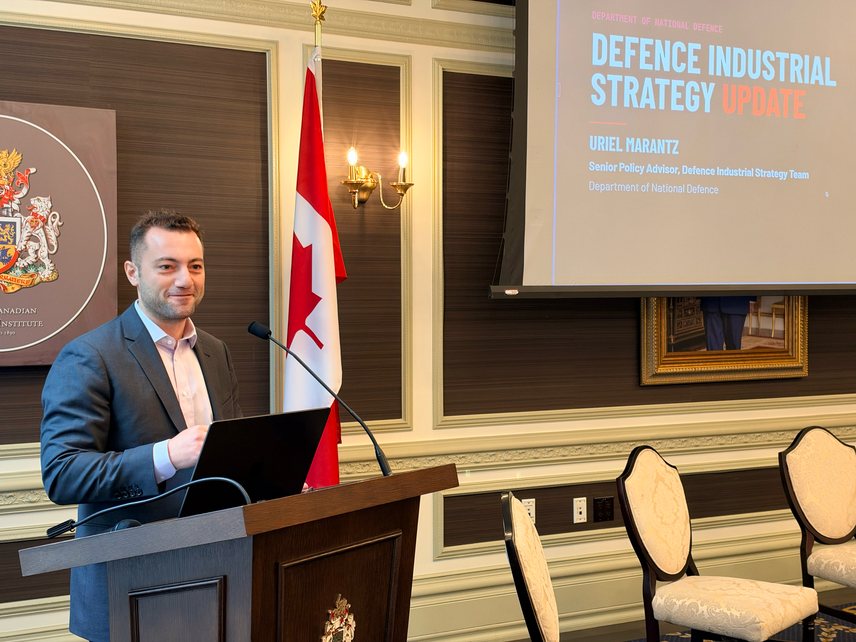
Uriel Marantz delivered the federal Defence Industrial Strategy update, addressing the evolving defence industrial landscape and considerations related to Canadian sovereignty, domestic industrial participation, and national defence priorities.

The presentation provided strategic context for the discussions that followed.

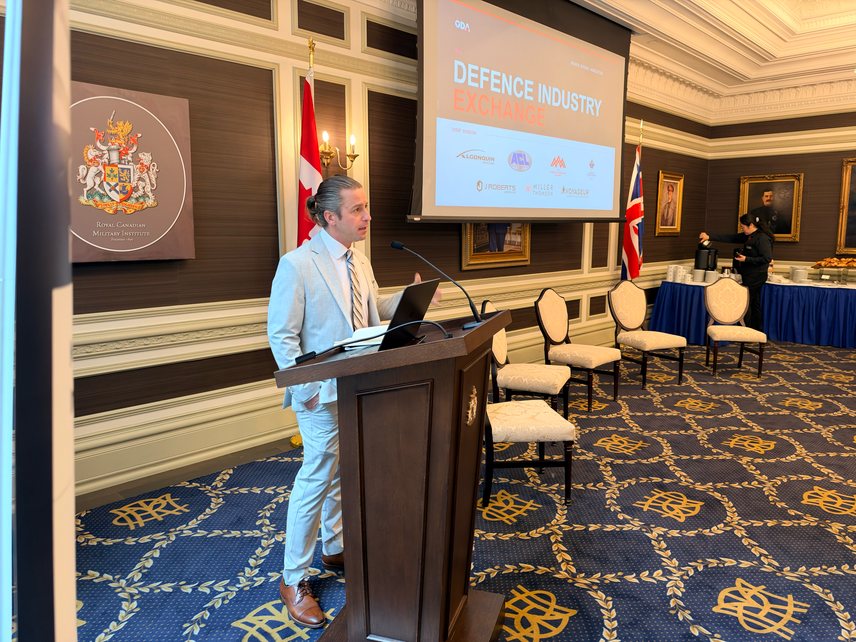
Speaker at the podium in front of a slide titled Defence Industrial Strategy Update
Defence Industrial Strategy Update · Otter Room
Matthew Gordon

Ontario Defence Industrial Strategy Vision Outlook

Matthew Gordon, Director, Sector Strategy Branch, Ontario Ministry of Economic Development, Job Creation and Trade (MEDJCT), presented the provincial defence industrial strategy outlook.

The session provided industry participants with a perspective on Ontario’s emerging defence industrial direction and the importance of positioning provincial industrial capabilities within Canadian and allied defence supply chains.

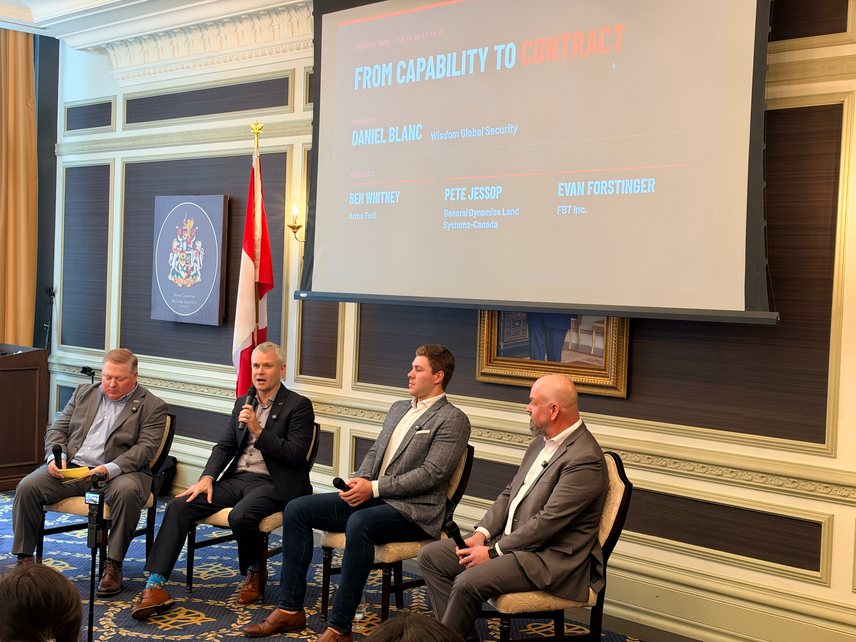
1.4Industry Panel — From Capability to Contract

Four panellists seated on stage beneath a screen titled From Capability to Contract
Industry Panel — From Capability to Contract.
Moderator
Daniel (Dan) Blanc Founder and CEO, Wisdom Global Security.
Panellists
Ben Whitney President, Armo Tool.
Pete Jessop Strategic Pursuits and Supplier Business Development, General Dynamics Land Systems–Canada.
Evan Forstinger Technical Sales Representative, FBT Inc.

The panel explored practical pathways through which Ontario companies can enter, participate in, and scale within defence markets.

Key subjects included supplier readiness, qualification and compliance requirements, manufacturing capability, access to prime contractors, procurement pathways, and the transition from industrial capability to contracted work.

The composition of the panel brought together established defence industry experience and the perspective of an Ontario precision manufacturer participating in defence supply chains.

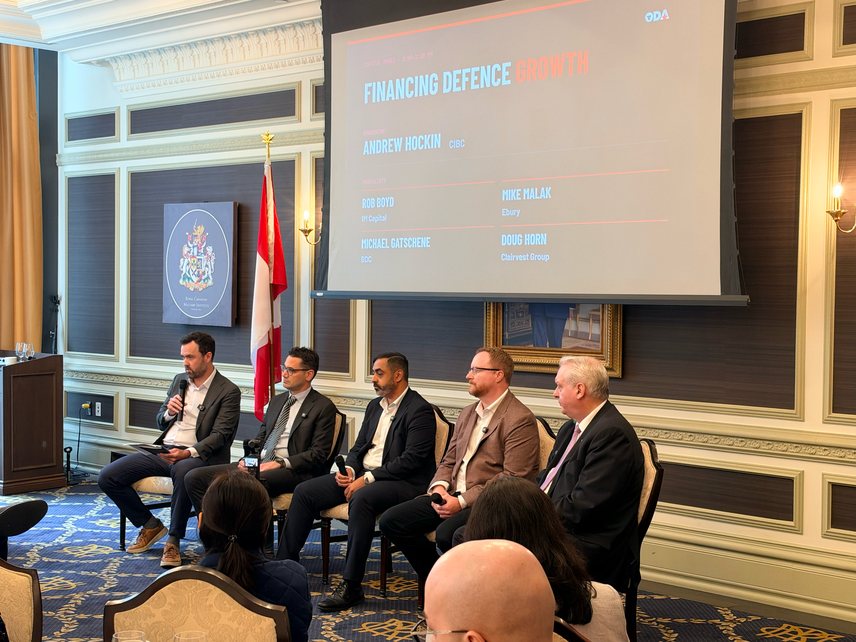
1.5Capital Panel — Financing Defence Growth

Five capital panellists seated on stage beneath a screen titled Financing Defence Growth
Capital Panel — Financing Defence Growth, Otter Room.
Moderator
Andrew Hockin Senior Director, Leveraged Finance, CIBC.
Panellists
Rob Boyd CFO and COO, Institutional Mortgage Capital (IM Capital).
Mike Malak Country Manager, Ebury Canada.
Michael (Peter) Gatschene Manager, Business Centre, Defence Sector, BDC.
Doug Horn Managing Director, Clairvest.

The capital panel explored the financial requirements associated with entering and expanding within defence markets.

Discussion subjects included operating capital, industrial investment, growth financing, procurement timelines, and the financial challenges facing organizations seeking to qualify for and participate in defence opportunities.

The panel emphasized the importance of matching financing structures with the specific risks, timelines, and operating requirements associated with defence industrial activity.

1.6Executive Industry Roundtables

Two facilitated executive roundtables operated in parallel with the main auditorium program.

Executives seated around a long table in the RCMI Library, surrounded by bookshelves
Roundtable 1

Library

FacilitatorsCarl Kumpic, Voyageur Aviation.
Peter Studer, CFN Consultants.

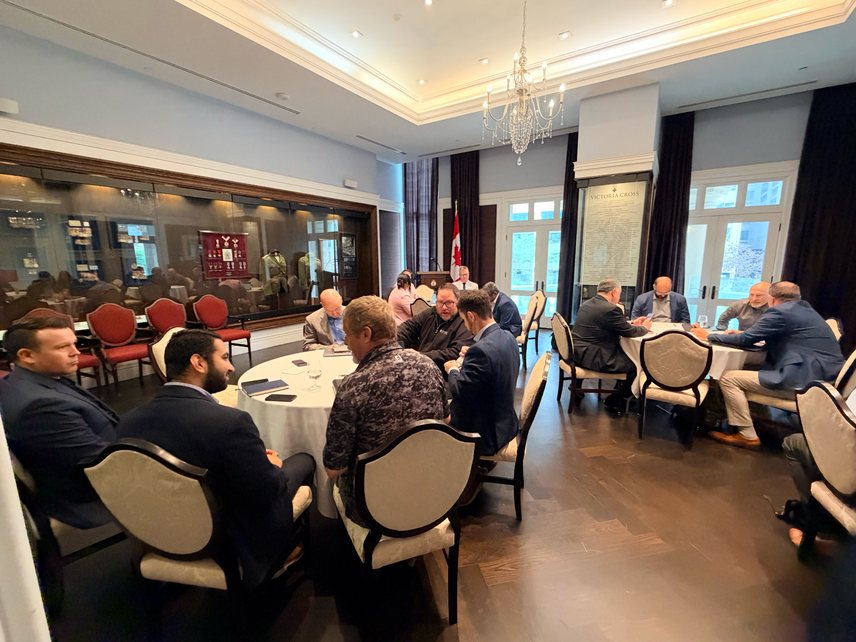
Participants seated at round tables in the Medals Room in front of display cases
Roundtable 2

Medals Room

FacilitatorsFlorent Lefevre-Schlick, AADF Ventures.
Scott Healey, BluMetric.

Both roundtables explored the evolving defence industrial environment and the practical journey through which organizations identify, pursue, and deliver defence-related capabilities.

The discussion framework addressed:

1

Signal and Orientation

Understanding government priorities, industrial demand, and emerging defence opportunities.

2

Orientation and Mobilization

Determining how organizations respond to opportunities and identifying barriers to participation.

3

Capability to Contract and Scale

Examining the transition from technical or industrial capability to procurement, supply-chain integration, and scalable business activity.

4

Looking Forward — FY 2027–2028

Identifying emerging priorities, unresolved challenges, and opportunities for improved industry coordination.

Facilitators were encouraged to allow discussions to evolve organically and capture the practical experiences, observations, concerns, and suggestions provided by participating organizations.

02Section 02

Industry Consultation and Feedback Capture

Industry feedback was collected through the two executive roundtables and a digital industry feedback platform accessible during the event.

Library

The Library roundtable generated categorized comments concerning advocacy, industrial challenges, resources, and opportunities for collaboration.

Medals Room

The Medals Room generated extensive qualitative discussion records covering procurement, industrial readiness, financing, government programs, commercial relationships, and opportunities for greater industry coordination.

Digital Feedback

The digital feedback mechanism provided an additional opportunity to identify demand signals, operational constraints, enabling conditions, and priorities for the next 12–18 months.

The findings presented below consolidate the substantive themes across these sources.

They reflect industry perspectives shared during the Exchange and are intended to inform constructive engagement among businesses, governments, financial institutions, and other enabling stakeholders.

03Section 03

Consolidated Industry Findings

3.1

Defence Demand Visibility and Investment Certainty

A recurring concern was the lack of sufficiently detailed, timely, and accessible information regarding future defence requirements and procurement opportunities.

Participants recognized increasing government attention and investment commitments related to national defence. However, organizations indicated that broad announcements do not always provide the specificity necessary to make investment, production, workforce, or business development decisions.

Principal Issues Identified
  • Limited visibility into specific procurement needs below the level of major defence platforms.
  • Difficulty distinguishing announced investment intentions from executable opportunities and funded requirements.
  • Uncertainty regarding procurement schedules and when demand will reach SMEs and lower-tier suppliers.
  • Gaps between published plans, government outlook documents, and current information available through procurement channels.
  • The risk of organizations investing in new capabilities without sufficient information about the likelihood or timing of future contracts.
  • Industrial capacity being difficult to sustain while organizations await procurement activity.
  • Potential loss of skilled employees, established industrial capacity, and supply-chain readiness during prolonged procurement delays.
  • Concern that existing manufacturing capabilities may be overlooked in favour of new programs or technologies, even where established firms already possess relevant capacity.

Participants emphasized that investment decisions for equipment, facilities, and long-lead production capabilities must frequently be made before contracts are awarded.

Companies therefore require more than general awareness of future spending. They require sufficient demand intelligence to understand whether an opportunity is credible, relevant, and likely to materialize within an economically viable timeframe.

3.2

Procurement Access and Market Navigation

Participants identified defence procurement navigation as a significant barrier, particularly for organizations entering the sector for the first time.

Companies may need to navigate multiple procurement systems, government departments, contracting authorities, qualification procedures, and industry engagement mechanisms.

Principal Issues Identified
  • The absence of a clear and accessible roadmap for entering Canadian defence markets.
  • Difficulty identifying relevant procurement portals and opportunity sources.
  • Limited access to sufficiently detailed technical requirements early in the procurement process.
  • Challenges locating specifications, drawings, and product requirements within procurement documentation or associated supplier systems.
  • The cost of participating in procurement processes without clear visibility of likely contract outcomes.
  • The importance of engaging relevant procurement and technical personnel before formal solicitations are issued.
  • Challenges transitioning from requests for information, demonstrations, and testing activities into competitive procurement and production contracts.
  • Limited understanding of the distinctions between innovation funding, demonstration programs, direct government procurement, and prime-contractor supply-chain opportunities.

Participants suggested that organizations would benefit from clearer information on the different routes to market, the institutions involved, and the requirements associated with each pathway.

The discussion reinforced that general procurement awareness is not equivalent to practical procurement readiness.

3.3

Prime Contractors, Tier 1 Suppliers, and Industrial Matchmaking

A strong recurring theme was the need to improve direct connections between Ontario SMEs and major defence contractors.

Participants noted that direct engagement with a prime contractor may not always be the most effective route to an opportunity. Many relevant requirements exist within Tier 1, Tier 2, and lower-tier supply chains.

Principal Issues Identified
  • Limited visibility into prime-contractor supply-chain structures.
  • Difficulty identifying the organizations responsible for specific subcontracting requirements.
  • Insufficient information about the industrial capabilities required by defence primes and their suppliers.
  • Limited structured opportunities for SMEs to demonstrate relevant industrial capabilities to buyers.
  • Difficulty converting general networking activity into sustained commercial engagement.
  • Limited visibility among major buyers of capabilities already present within Ontario.
  • The need for more direct interaction between qualified suppliers and relevant technical or procurement representatives.
  • Limited awareness of emerging industrial teaming arrangements and associated opportunities.

Participants identified value in structured capability directories, supplier mapping, buyer guides, targeted industrial engagement, and opportunities to connect qualified Ontario businesses with relevant defence supply chains.

Strategic Partner Initiative

Capability Atlas — Developed by ENTEX in Collaboration with ODA

The need for improved capability visibility and industrial matchmaking has emerged repeatedly through ODA’s interactions with its membership and the wider defence and dual-use industrial community.

ENTEX, an ODA Strategic Partner, is developing the Capability Atlas to improve industrial capability discovery, mapping, and accessibility.

ODA is collaborating with ENTEX to introduce the platform to its members and facilitate broader industry access, connecting ENTEX’s technology and development work with the practical needs of Ontario’s defence industrial ecosystem.

The Capability Atlas is currently available in an early-access beta environment through the ODA Member Hub.

The initiative is intended to strengthen industry capability discovery, support informed buyer-supplier engagement, and improve the visibility of relevant Ontario industrial competencies.

The ENTEX-developed Capability Atlas will also be complemented by procurement intelligence capabilities supported through ODA’s strategic partnership with Publicus and accessible through the Member Hub.

Public Beta Launch Oct 20 2026 https://capabilityatlas.ca
3.4

Industrial and Technological Benefits (ITBs)

Industrial and Technological Benefits emerged as an area requiring practical education, greater transparency, and improved accessibility.

Participants identified uncertainty concerning ITB requirements, engagement processes, the role of prime contractors and their supply chains, and how SMEs can position their capabilities for participation.

Principal Issues Identified
  • The need for accessible introductory guidance explaining how the ITB system operates.
  • Better visibility into relevant ITB commitments and associated supplier opportunities.
  • Improved understanding of decision-making processes and the stakeholders involved.
  • More direct engagement between SMEs and relevant ITB personnel.
  • Greater clarity concerning lower-tier suppliers involved in major defence programs.
  • Better awareness of the industrial commitments undertaken by primes and Tier 1 suppliers.
  • The importance of understanding how ITB considerations intersect with procurement, supplier qualification, and established commercial relationships.

Participants emphasized that ITB-related opportunities can be difficult to navigate without an understanding of the organizations, requirements, and commercial relationships involved.

The discussions reflected a desire for more practical, industry-accessible information and direct engagement with individuals familiar with the processes.

3.5

Access to Capital and the Cost of Industrial Transition

Financing was identified across the consultation channels as a significant issue affecting industrial readiness.

Participants described a mismatch between normal business investment timelines and the lengthy periods sometimes required to pursue, qualify for, and secure defence contracts.

Principal Issues Identified
  • Limited availability of capital to fund equipment, certification, testing, and business development.
  • Difficulty carrying operating costs while awaiting procurement and contract decisions.
  • Uncertainty concerning the return on investment from capabilities developed in anticipation of future defence demand.
  • The need for financing mechanisms that reflect the risk profile and long timelines associated with defence market entry.
  • The effects of wider economic conditions and international trade pressures on firms’ ability to fund diversification.
  • The need to understand grants, contributions, loans, investments, and other funding mechanisms together.
  • Uncertainty regarding eligibility, timing, and compatibility of different financial support programs.
  • The need for funding that supports both innovation and the scaling of established industrial capabilities.
  • The financial burden of maintaining qualified personnel, equipment, and facilities during periods of delayed demand.
  • The importance of timely assessment, approval, and deployment of funding associated with industrial development initiatives.

Participants expressed interest in financing arrangements that better accommodate the realities of defence procurement cycles and the industrial investments required to establish readiness.

There was also recognition that financial support should consider existing manufacturers seeking to expand or diversify, not solely newly established enterprises.

3.6

Certifications, Cybersecurity, and Regulatory Readiness

Certification and regulatory compliance costs were repeatedly identified as barriers to entering and expanding within defence supply chains.

Participants referenced industrial standards, controlled goods requirements, security clearances, and cybersecurity certification programs.

These included the United States’ Cybersecurity Maturity Model Certification (CMMC) framework and Canada’s Canadian Program for Cyber Security Certification (CPCSC).

Principal Issues Identified
  • Direct costs associated with certification, audits, consulting, and compliance implementation.
  • Limited specialist resources within smaller companies.
  • Uncertainty concerning the timing and applicability of evolving cybersecurity requirements.
  • The complexity of different compliance regimes across Canadian and international defence markets.
  • Challenges obtaining organizational and personnel security clearances.
  • Difficulty accessing certain requirements or opportunities before relevant security approvals are established.
  • The risk of companies investing heavily in compliance without clear associated procurement opportunities.
  • The need for proportionate compliance and risk-management approaches that recognize differences in organizational size, role, and exposure.
  • Limited awareness of financial and advisory resources that may be available to support certification readiness.

Participants emphasized that cybersecurity and regulatory readiness are essential to participating in defence supply chains, but the associated costs and processes can be challenging for SMEs.

The feedback included requests for practical education, specialist guidance, and appropriate support mechanisms to help companies understand and satisfy relevant requirements.

3.7

Workforce Development, Skilled Trades, and Immigration

Workforce availability and development were identified as both immediate and longer-term concerns.

Participants described competition for qualified employees between large manufacturers, smaller firms, and established defence suppliers.

Principal Issues Identified
  • Difficulty recruiting and retaining specialized manufacturing personnel.
  • Shortages affecting skilled trades and production roles, including CNC operations.
  • Potential loss of existing industrial skills during periods of low or delayed demand.
  • Misalignment between some education and training programs and immediate employer requirements.
  • The need for defence-specific skills beyond manufacturing, including business development, administration, procurement, and compliance.
  • The effects of immigration processing and work authorization timelines on companies seeking to recruit or retain skilled employees.
  • The longer-term effects of retirements on manufacturing workforce capacity.
  • The need for employers to participate directly in the development of industry-relevant training pathways.
  • Opportunities for stronger collaboration among employers, colleges, universities, workforce development organizations, and government.

Participants indicated that workforce readiness should be considered alongside equipment investment, procurement demand, and industrial growth.

Companies require sufficient confidence in future activity to retain trained employees and make longer-term commitments to workforce development.

3.8

Domestic Industrial Capacity and Canadian Participation

Participants discussed how defence investment can strengthen Canadian industrial capabilities while remaining mindful of established international commercial relationships.

Several contributors advocated for clearer incentives, procurement considerations, and strategic support encouraging the development and use of Canadian industrial capabilities.

The feedback distinguished between purchasing Canadian products and investing in capabilities that are developed, manufactured, and sustained within Canada.

Principal Issues Identified
  • Supporting domestic industrial capacity through more predictable procurement demand.
  • Encouraging Canadian participation in the supply chains associated with major defence projects.
  • Protecting established manufacturing capabilities and preventing avoidable relocation of industrial capacity.
  • Supporting domestic technology development and production scaling.
  • Identifying opportunities for Canadian manufacturers within major equipment and platform programs.
  • Balancing sovereign industrial objectives with existing international supply relationships that remain commercially or operationally valuable.
  • Considering supply-chain resilience, material availability, and domestic sources of critical industrial inputs.
  • Identifying opportunities for established firms in adjacent sectors to contribute to defence requirements.
  • Exploring incentives and procurement considerations that could strengthen Canadian industrial participation while respecting applicable obligations and operational needs.

The discussions emphasized that strengthening domestic industrial capability requires both market opportunity and the conditions necessary for companies to invest, produce, and remain commercially competitive.

3.9

Innovation, Testing, Commercialization, and Production Scaling

Innovation pathways were discussed as an important component of industrial development, but participants emphasized the need to connect innovation programs with commercial outcomes.

The discussions included practical examples involving government innovation testing streams and the challenges associated with moving from product development to procurement.

Principal Issues Identified
  • The time required to progress through proposal development, evaluation, testing, and contracting.
  • Difficulty locating appropriate end users and testing partners.
  • The importance of establishing relationships with relevant technical stakeholders.
  • The financial burden of maintaining development and testing activities before revenue becomes available.
  • The need to distinguish early-stage innovation support from procurement opportunities for products already ready for deployment.
  • Difficulty scaling from a successful prototype to repeatable manufacturing and production.
  • The importance of technical requirements, material selection, testing, quality assurance, and manufacturing partnerships.
  • Challenges understanding applicable technical readiness and qualification requirements.
  • Limited access to specialist manufacturing and engineering resources needed to move products into production.

Industry feedback emphasized the value of earlier access to end-user requirements, technical guidance, testing facilities, qualified suppliers, and manufacturing partners.

Small demonstration projects with clear performance objectives were also identified as potentially useful in helping organizations progress from promising designs to commercially viable production.

3.10

Government Coordination and Policy Implementation

Participants identified a perceived gap between strategic announcements and practical implementation across governments and supporting organizations.

Principal Issues Identified
  • The need for greater clarity concerning desired industrial outcomes.
  • Differences in the pace and priority assigned to defence industrial development across organizations.
  • The importance of maintaining progress on procurement reform.
  • The need for coordination among federal, provincial, and other relevant stakeholders.
  • Greater accessibility of decision-makers and subject-matter specialists.
  • The importance of ensuring defence industrial initiatives support practical near- and medium-term outcomes for SMEs.
  • Better communication concerning emerging strategies, requirements, and implementation schedules.
  • Timely assessment, approval, and deployment of proposals submitted through relevant funding and industrial development initiatives.
  • Improved alignment between industrial development programs and the practical conditions faced by suppliers.

Participants also emphasized that effective defence industrial development depends not only on assisting companies to become ready, but also on the ability of procurement systems and customers to convert industrial capabilities into tangible opportunities.

3.11

Intellectual Property and Industrial Supply-Chain Resilience

Participants raised concerns about protecting proprietary data and intellectual property, particularly during procurement engagement, partnership development, and innovation activities.

Other concerns included the security and reliability of suppliers within established industrial supply chains.

Principal Issues Identified
  • Protection of commercially sensitive technical information and intellectual property.
  • Managing information disclosure during early engagement with prospective customers and industrial partners.
  • Maintaining appropriate confidentiality when participating in industry collaboration.
  • Protecting Canadian-developed technologies while supporting commercialization and international market access.
  • Identifying and managing vulnerabilities within industrial supply chains.
  • Maintaining reliable access to required materials, components, and specialized suppliers.
  • Balancing increased collaboration with legitimate commercial and security considerations.

The feedback reflects the importance of trusted relationships, appropriate information safeguards, and resilient supplier networks as Ontario companies pursue a growing range of defence opportunities.

04Section 04

Roundtable Findings — Detailed Record

4.1Executive Roundtable 1 — Library

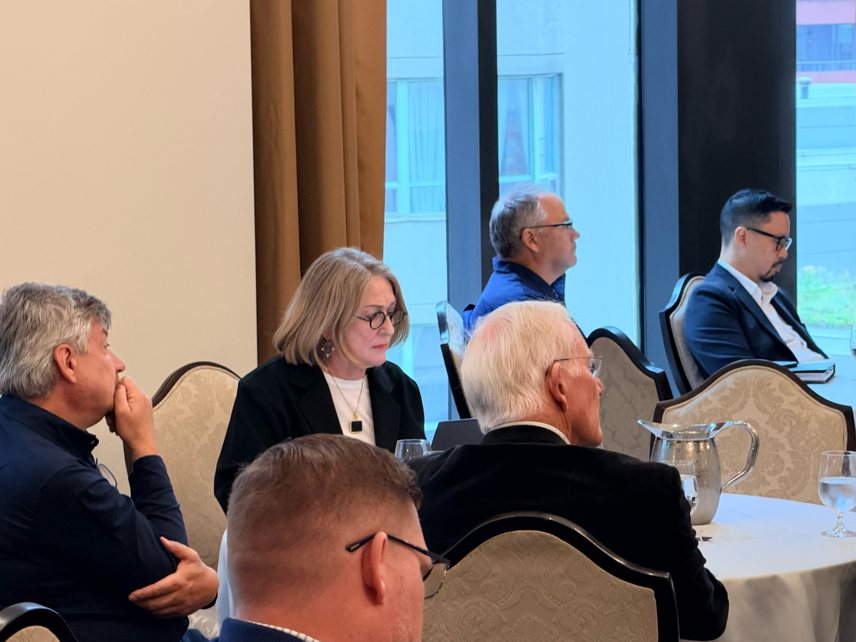
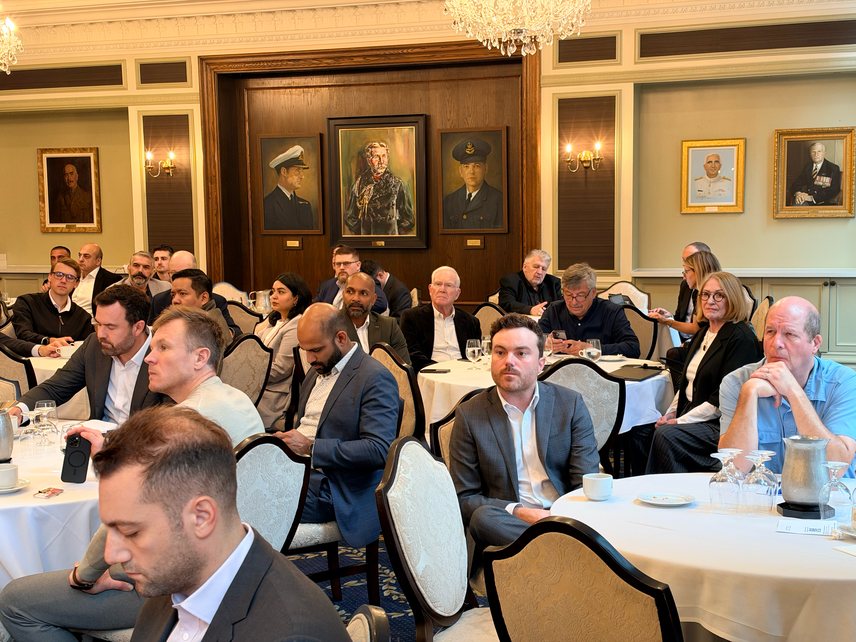
Roundtable participants listening during discussion
Executive Industry Roundtable discussion.

The Library roundtable produced 48 distinct entries organized into advocacy priorities, industry concerns, requested resources, and an additional suggestion.

Advocacy Priorities

14
  • Post-secondary collaboration: Engage colleges to identify practical collaboration opportunities, particularly in skilled trades and industrial skills development.
  • Industrial capacity retention: Engage governments on mechanisms to prevent loss of industrial capacity caused by delays between project planning and implementation.
  • Defence-specific skills: Encourage workforce development programs covering technical trades, business development, and administrative competencies relevant to defence industry participation.
  • Canadian-developed capability: Encourage targeted acquisition of defence capabilities developed and manufactured in Canada, distinguishing this from general Buy Canadian purchasing policies.
  • Retention of domestic operations: Explore measures that encourage companies to maintain Canadian industrial operations while remaining internationally competitive.
  • Dynamic risk management: Encourage proportionate, risk-based requirements rather than applying identical expectations to all companies.
  • Immigration and workforce: Engage relevant government stakeholders on immigration measures supporting skilled trades and defence industrial requirements.
  • Defence innovation infrastructure: Advocate for appropriate Ontario-based defence innovation infrastructure and industry-accessible innovation support.
  • SME and major-industry engagement: Facilitate interaction between large Ontario industrial organizations and smaller defence and dual-use companies.
  • Timely funded development: Advocate for improved timelines in the assessment, approval, and deployment of funded development initiatives.
  • Industrial productivity: Encourage targeted investment supporting innovation, efficiency, and productivity within Ontario’s defence industrial base.
  • Institutional access: Improve SME opportunities to engage representatives responsible for defence industrial strategy and investment initiatives.
  • Defence SME financing: Encourage financing mechanisms that recognize the risks and requirements of defence industrial growth.
  • ITB engagement: Facilitate discussion between SMEs and Industrial and Technological Benefits stakeholders to improve understanding and accessibility.

Industry Concerns

20
  • Competition for qualified labour between major firms and SMEs, and among SMEs themselves.
  • Limited clarity concerning desired government outcomes for defence industry development.
  • Delays between policy announcements and measurable implementation.
  • Insufficient attention to established industrial capabilities and their potential to scale.
  • Limited understanding of ITB processes and participation requirements.
  • Insufficient visibility of SME capabilities among prime contractors and their suppliers.
  • The need for stronger domestic workforce development pathways.
  • High costs associated with cybersecurity and regulatory certification.
  • Uncertainty regarding the return on industrial investments made ahead of procurement decisions.
  • Concern that highly visible initiatives may receive attention before programs delivering broader near-term benefits.
  • Limited access to relevant government and industry decision-makers.
  • Insufficient awareness of defence industry institutions, strategies, and programs.
  • Financing constraints affecting operating requirements, capital investment, and business growth.
  • Protection of company data, proprietary information, and intellectual property.
  • Loss of skilled labour resulting from delayed industrial opportunities.
  • Differences in the urgency and pace of defence industrial development across relevant organizations.
  • Insufficient demand intelligence to support informed investment decisions.
  • Security and reliability of existing industrial supply chains.
  • The need to balance sovereign industrial capability objectives with existing effective supply arrangements.
  • Potential delays in operational adoption of new defence capabilities and the resulting effects on industrial suppliers.

Requested Resources and Enabling Support

13

Participants identified value in the following resources and forms of support:

  • Accessible briefings on defence industrial strategy, relevant institutions, and associated opportunities.
  • More current information concerning planned defence projects and industrial requirements.
  • Practical guidance covering cybersecurity, including CPCSC and CMMC, ITBs, controlled goods, and related compliance obligations.
  • Lessons-learned resources addressing common operational and cross-border business challenges.
  • Information concerning relevant federal, provincial, municipal, and other industrial development programs.
  • Improved identification of relevant suppliers within major defence industrial teams.
  • Opportunities for timely, subject-specific industry knowledge exchange.
  • Improved awareness of industrial opportunities arising from major contract awards.
  • More current information concerning industrial teaming arrangements and supplier requirements.
  • Opportunities for Ontario companies with complementary capabilities to collaborate on larger defence opportunities.
  • Accessible terminology and introductory guidance concerning defence industry processes.
  • Improved opportunities to establish relevant relationships with major defence buyers and suppliers.
  • Consolidated information concerning available funding and enabling programs.

4.2Executive Roundtable 2 — Medals Room

The Medals Room adopted a discussion-led process and captured five substantial records covering multiple issues.

The notes provide qualitative examples that complement the categorized feedback from the Library.

Understanding the Defence Ecosystem

Participants emphasized that companies must understand the defence ecosystem before pursuing individual procurement opportunities.

This includes identifying relevant government organizations, prime contractors, innovation centres, procurement mechanisms, commercial relationships, and operational customers.

Participants discussed the importance of aligning an organization’s capabilities with genuine customer requirements and developing relationships with the appropriate stakeholders.

They also cautioned against assuming that the availability of ITB-related opportunities alone is sufficient to establish a viable commercial proposition.

Procurement Information and Market Access

A significant portion of the discussion focused on challenges associated with finding and understanding procurement opportunities.

Participants indicated that suppliers need clearer information concerning procurement platforms, opportunity sources, contracting requirements, and the organizations involved in purchasing decisions.

They also emphasized the cost and difficulty of determining whether a procurement opportunity is technically or commercially relevant.

These challenges can become more significant for smaller firms without established defence procurement relationships or dedicated business development personnel.

Innovation Procurement Experience

The discussion included an example involving an autonomous aviation company pursuing a government innovation testing opportunity.

The experience illustrated both the value of testing programs and the challenges associated with qualification, technical engagement, contracting, security requirements, and financing.

Participants emphasized the importance of identifying appropriate testing partners and maintaining sufficient financial resources throughout development and procurement.

The group also distinguished between innovation programs and procurement opportunities for mature products, noting that the required pathways may differ substantially.

Industrial Partnerships and Domestic Procurement

Participants discussed Canadian industrial participation in major defence programs and the opportunities potentially available to domestic manufacturers.

Specific themes included improved supplier visibility, more direct engagement with prospective buyers, and the importance of connecting domestic industrial capability with major project requirements.

Participants also raised opportunities associated with international defence supply chains and adjacent industrial sectors, including energy.

Workforce and Industrial Readiness

Workforce development, immigration processes, operating costs, and technical compliance were recurring subjects.

Participants highlighted difficulties retaining specialized personnel, the importance of practical employer-led training, and the costs associated with security clearances and certifications.

They also discussed how smaller industrial organizations may require different support mechanisms from those available to larger established defence contractors.

Continuing Industry Engagement

Participants expressed interest in further focused discussions addressing specific industrial barriers.

Areas of interest included procurement navigation, supplier readiness, industrial partnerships, workforce development, and the requirements associated with moving from early business development into sustained defence contracting.

The discussions reinforced the value of direct dialogue among organizations with different levels of experience within defence markets.

05Section 05

Conclusions and Implications for Ontario’s Defence Industrial Base

5.1

Industrial Readiness Depends on Credible Demand Signals

Companies require sufficiently detailed and timely information concerning future defence requirements before committing significant resources.

General investment announcements can stimulate industry interest, but investment decisions depend on practical information concerning opportunities, timelines, eligibility, and expected demand.

5.2

Existing Industrial Capabilities Require Greater Visibility

Ontario possesses extensive industrial capability across established defence manufacturers and adjacent commercial sectors.

The challenge is not solely a shortage of capability. It is also the difficulty of identifying, classifying, communicating, and connecting available capabilities to relevant customers and programs.

5.3

Defence Market Access Remains Challenging for SMEs

Participants consistently identified the need for improved access to procurement information, appropriate contacts, and relevant supply-chain decision-makers.

These barriers can limit the ability of otherwise capable organizations to participate in defence opportunities.

5.4

Industrial Participation Requires More Than Investment Announcements

Financing, certification, cybersecurity, security requirements, workforce capacity, and procurement readiness can determine whether an organization is actually capable of responding to opportunities.

These enabling conditions are interconnected and should be considered together when assessing industrial readiness.

5.5

Effective Coordination Across the Ecosystem Is Essential

Industry feedback highlighted the importance of ongoing engagement among manufacturers, financial institutions, governments, defence customers, and industry-enabling organizations.

The exchange of information, identification of common challenges, and development of practical relationships can help reduce fragmentation across the industrial ecosystem.

5.6

Continuous Industry Intelligence Can Strengthen Decision-Making

The feedback also demonstrated the value of collecting industry information continuously, organizing it into usable intelligence, and making relevant findings available to organizations positioned to act on them.

ODA is advancing a dedicated industry intelligence capability during 2026 to support this approach, building on its existing member intelligence resources and the lessons captured through recurring industry engagement.

06Section 06

ODA Initiatives, Deployed Resources, and Continuing Development

The findings from the inaugural Industry Exchange reinforce the importance of practical resources and services that improve access to information, industrial capabilities, and relevant stakeholders.

ODA has launched member-facing resources, continues to develop additional programs, and collaborates with strategic partners to make specialized capabilities available to its members and the broader industry.

These activities include services directly administered by ODA and independent technology initiatives developed by its strategic partners.

6.1Member Hub and Existing Resources

The ODA Member Hub provides approved members with access to a growing collection of resources supporting defence market awareness, industry connectivity, and supplier readiness.

Currently available resources include:

Additional information is available through the Member Hub at ontariodefence.ca. Member Hub resources are available to approved ODA members.

6.2Capability Atlas — Developed by ENTEX

StatusEarly-access beta available through ODA Member Hub; public beta launch scheduled for October 20, 2026

ENTEX, an ODA Strategic Partner, is the developer of the Capability Atlas, a digital platform intended to improve the identification, mapping, and visibility of industrial capabilities across the defence and dual-use sectors.

The platform is being developed by ENTEX to help address recurring challenges associated with industrial capability discovery, supplier visibility, and connections between businesses and relevant market opportunities.

The Ontario Defence Association is collaborating with ENTEX to facilitate access to this capability for ODA members and, through the upcoming public beta launch, the broader industry.

The collaboration brings together ENTEX’s independent technology development and ODA’s industry network, providing a pathway to introduce the platform to organizations seeking greater visibility of relevant industrial capabilities.

The Capability Atlas is currently accessible to ODA members through an early-access beta environment within the Member Hub.

The public beta launch is scheduled for October 20, 2026. https://capabilityatlas.ca

The platform will continue evolving through ENTEX’s development work, with collaboration and industry engagement supporting its introduction and ongoing relevance to defence and dual-use businesses.

6.3Procurement Opportunity Intelligence — Publicus Strategic Partnership

StatusIntegration and continued development

Through its strategic partnership with Publicus, ODA is advancing access to procurement intelligence capabilities through its Member Hub.

This collaboration supports improved access to procurement-related information and complements the ENTEX-developed Capability Atlas by helping participating organizations identify opportunities relevant to their industrial capabilities.

The two strategic partnerships address related but distinct needs:

ENTEX

Capability Atlas

Industrial capability visibility, mapping, and discovery.

Publicus

Procurement Intelligence

Access to relevant procurement opportunities and supporting market information.

Together, these complementary capabilities are intended to improve industry access to information and support more informed business development activity.

6.4

Industry and Prime-Contractor Engagement

StatusUnder development; included within funded project proposals submitted for consideration

ODA is advancing initiatives intended to strengthen engagement among Ontario suppliers, prime contractors, and relevant industry stakeholders.

These initiatives support the Association’s broader objective of improving industry connectivity and creating more practical opportunities for collaboration.

6.5

Defence Supplier Readiness

StatusUnder development

ODA continues to develop programming and resources supporting organizations seeking to enter or expand within defence markets.

Relevant areas include supplier qualification, industrial readiness, cybersecurity, regulatory requirements, and navigation of defence market expectations.

6.6

Defence Financing and Business Growth

StatusUnder development

ODA is working to strengthen connections between defence and dual-use companies and organizations offering relevant financing, business advisory services, and growth support.

The inaugural Exchange’s capital panel contributed to this engagement by bringing together financial and investment representatives with participating industry organizations.

6.7

Workforce and Industrial Skills Development

StatusInitial development

ODA recognizes the importance of aligning industry workforce requirements with relevant education, training, and workforce development partners.

The Association continues to engage with relevant organizations to better understand industry requirements and opportunities for coordinated development.

6.8

Recurring Industry Engagement

StatusLaunched September 29, 2026; continuing development

The inaugural Defence Industry Exchange marks the beginning of ODA’s ongoing industry engagement series.

The Association intends to continue convening participating companies and relevant stakeholders through focused engagements that support industry intelligence, relationship development, and discussion of common industrial challenges.

These activities will complement ODA’s broader programming and its relationship with the Best Defence Conference, designated as the Association’s Official Conference.

6.9

Industry Intelligence and Stakeholder Coordination

Status2026 development

ODA is advancing its own industry intelligence activities to support the continuing collection, organization, and communication of relevant industry findings.

The Association intends to use recurring engagement and member input to support constructive dialogue with relevant decision-making stakeholders.

ODA is actively working with its ecosystem partners, strategic partners, founding members, government stakeholders, and other enabling organizations to identify opportunities for collaboration and the development of scalable industry solutions.

These activities also provide opportunities to introduce members to independently developed capabilities offered by strategic partners, including the ENTEX-developed Capability Atlas and procurement intelligence supported through Publicus.

The Association will continue sharing relevant findings with organizations positioned to contribute practical expertise, resources, and support to Ontario’s defence industrial base.

07Section 07

Invitation to Industry-Enabling Organizations and Service Providers

The findings presented in this report identify challenges that cannot be addressed by industry associations or individual businesses acting alone.

Many require specialized expertise, established service capabilities, financial resources, technical knowledge, or collaboration among multiple organizations.

The Ontario Defence Association welcomes engagement from businesses and organizations that can contribute to addressing these challenges.

7.1

Join the ODA Service Provider Directory

Organizations providing established services relevant to defence and dual-use companies are invited to apply for inclusion in the Ontario Defence Association’s Service Provider Directory.

Relevant services may include:

  • Legal, financial, and business advisory services.
  • Defence procurement and market-entry support.
  • Cybersecurity, regulatory compliance, and certification.
  • Engineering, manufacturing, testing, and quality assurance.
  • Industrial logistics and supply-chain services.
  • Workforce development, recruitment, and training.
  • Security, export controls, and specialized professional services.

Applications are free, and ODA membership is not required to apply.

The directory connects qualified service providers with ODA’s member community, helping companies identify organizations capable of supporting their operational and business development needs.

Applications are reviewed by ODA, and inclusion is subject to the Association’s eligibility and verification requirements.

7.2

Collaborate on Industry Solutions

ODA also invites established businesses, subject-matter experts, service providers, research organizations, financial institutions, and other industry-enabling stakeholders to participate in addressing the challenges identified through this report.

Organizations that possess expertise, resources, technologies, services, or capabilities that could contribute to resolving these challenges are encouraged to contact ODA’s Director of Programs.

The objective is to connect relevant expertise with identified industry needs and explore opportunities for collaboration that can generate meaningful outcomes at scale.

Contact Ashan Corea Director of Programs
Ontario Defence Association
Email: ashancorea@ontariodefence.ca

ODA welcomes constructive engagement from organizations interested in supporting Ontario’s defence and dual-use industrial ecosystem.

08Section 08

Conclusion

The inaugural Ontario Defence Association Defence Industry Exchange demonstrated the value of bringing industry, government, financial institutions, and other stakeholders together in a focused engagement environment.

The event provided opportunities for strategic updates, direct industry dialogue, knowledge-sharing, relationship development, and structured feedback concerning Ontario’s defence industrial base.

The resulting findings highlight recurring challenges associated with procurement visibility, industrial matchmaking, financial accessibility, technical and regulatory readiness, workforce capacity, and the conversion of existing industrial capabilities into defence opportunities.

They also demonstrate the considerable industrial expertise already present in Ontario and the potential value of better connecting that expertise with emerging Canadian and allied defence requirements.

ODA is responding to these needs through its member resources, continuing program development, and collaboration with organizations bringing established expertise and independently developed capabilities to the defence industrial ecosystem.

These collaborations include ENTEX’s development of the Capability Atlas and ODA’s work to facilitate access to the platform for its members and the broader industry.

The Association intends to build on the inaugural Exchange through continuing engagement with industry, members, governments, financial institutions, and enabling stakeholders.

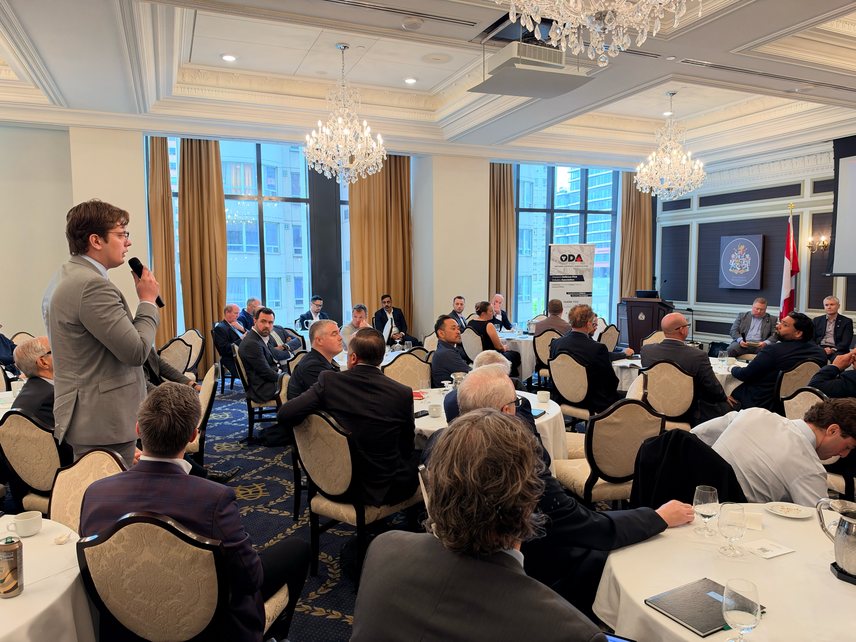
An attendee standing to ask a question during a panel in the Otter Room
Audience questions · Otter Room

The enduring value of the Industry Exchange will be measured not only by the conversations it facilitates, but by how effectively the intelligence collected supports collaboration, industrial readiness, and practical outcomes for Ontario’s defence and dual-use businesses.

From the Day

Event Gallery

ASchedule A

Event Attendance

Ontario Defence Association — Defence Industry Exchange 2026. Tuesday, September 29, 2026. Royal Canadian Military Institute, Toronto.

Participating organizations, organized by the principal event room and discussion assignment. The full attendee directory, with names and position titles where available, is included in Schedule A of the downloadable report.

A1

Main Auditorium — Otter Room

Algonquin BridgeArmo ToolAveraBDCBKS Technical SolutionsCanadian AICIBCCity of BramptonCity of WellandClairvestComposites CanadaDAIRDEFCADND / DISDonmac Precision MachiningEburyEDCEngineering Design LabFBT Inc.FedDev OntarioFPH / AllientFutures Manufacturing GroupGeneral Dynamics Land Systems–CanadaIM CapitalInternational Custom ProductsJointWerksJP Morgan CanadaJRoberts Defence & SecurityKITE Research Institute / UHNLogikor Inc.Lynch Fluid ControlsMachAIMEDJCTMiller ThomsonNiagara Region Economic DevelopmentNP AerospaceNuvis TechnologiesOaklins CanadaOntario Defence AssociationOntario ShipyardsPrototier-1 Inc.PublicusR. J. McGregor & AssociatesRazi StrategiesScentroidScitax Advisory PartnersSolar Electric SystemsThe Bench Advisory GroupTranlingo Business Services Corp.University of TorontoWeb4YouWisdom Global SecurityZentek
A2

Executive Industry Roundtable 1 — Library

A Berger PrecisionAlgonquin BridgeBDCBrotech Precision CNCCFN ConsultantsDMI PrecisionHigh Strength PlatesInnostratInternational Custom ProductsJointWerksJRoberts Defence & SecurityMEDJCTMycroft Technologies Inc.NordSpaceRaytheon ELCANShark MarineUncrewed SystemsVac AeroVoyageur Aviation
A3

Executive Industry Roundtable 2 — Medals Room

AADF VenturesAutomatic Coating LimitedAversanBDCBluMetricCareer FoundationsComposites CanadaD-TA SystemsDajcorDonmac PrecisionECI Technology GroupEnsil Inc.FPH / AllientGreat Lakes CopperKool KoatingsMEDJCTNewconQoherentRemote Robotic SystemsRibbitSynergy MouldworksTempo AerospaceTipcoTYR Tactical
Cover of the Defence Industry Exchange 2026 Findings Report
With Thanks

Acknowledgements

The Ontario Defence Association extends its appreciation to all attendees, speakers, panellists, moderators, roundtable facilitators, founding and strategic partners, event sponsors, and participating organizations for contributing to the inaugural Defence Industry Exchange.

ODA also recognizes the support of the Royal Canadian Military Institute and the event team responsible for event coordination and delivery.

The Association looks forward to building on the industry relationships, discussions, and insights generated through this inaugural engagement.

Report prepared by
Ashan Corea, Director of Programs, Ontario Defence Association · October 13, 2026

PDF · 37 pages · 10.5 MB · For general enquiries: info@ontariodefence.ca